
Multiflora Rose Removal in NC: Reclaim Thorny Pasture
Cut Brush Team · August 16, 2026 · 7 min read

Nobody plants a 12-foot wall of thorns on purpose anymore, but for a few decades, people did. Multiflora rose was handed out across the country from the 1930s through the 1960s as a “living fence” and wildlife cover, and old pasture country across Central North Carolina is still paying for it. If your fence lines have vanished into arching canes, your cattle have quit using a corner of the field, or a “little rose patch” now swallows a quarter acre, you’re fighting the same plant. Learning how to get rid of multiflora rose starts with understanding why this thicket rebuilds itself from every cane you leave touching the ground.
This guide covers how to identify multiflora rose against native roses and blackberry, why one-time cutting fails, the mulch-and-treat sequence that clears pasture for good, and what removal costs per acre.
How Do I Know It’s Multiflora Rose?
The giveaway is at the base of each leaf: multiflora rose has a feathery, fringed stipule where the leaf meets the stem, and no native rose in North Carolina has that fringe. Everything else about the plant can be confused with something; the fringed stipule can’t.
| Trait | Multiflora rose (invasive) | Native roses | Blackberry |
|---|---|---|---|
| Leaf base | Fringed, feathery stipule | Smooth stipule | No stipule fringe |
| Flowers | Clusters of small white blooms, May–June | Larger pink blooms, usually single | White, five petals |
| Growth | Arching canes to 10–15 ft, tip-rooting | Modest, stays put | Upright or trailing canes |
| Fruit | Small red hips in clusters, hang into winter | Larger single hips | Blackberries |
| Thicket size | Engulfs fence lines, whole field corners | Rarely forms thickets | Patches, less height |
The “arching” habit matters. Each cane that bends over and touches soil roots at the tip and starts a new plant, which is how one bush becomes a fortress. Birds do the long-distance work, eating the hips and seeding every fence line and cedar row for miles. Seeds stay viable in the soil for up to 20 years, which tells you something important: this is a management fight, not a one-day war.
In the old tobacco and cattle country around Roxboro and Creedmoor, multiflora rose is usually the first thing to claim a fence line and the last thing an owner wants to wade into with hand tools.
Why Cutting Multiflora Rose Once Doesn’t Work
A multiflora rose crown that gets cut responds by sending up more canes than it had before, so a single mow or brush-cut actually thickens the stand. University extension trials found it takes mowing three to six times per season, for two or more years, to kill established plants by exhaustion. Almost nobody keeps that schedule with a walk-behind cutter in a thorn thicket.
Digging works on young plants, but mature crowns anchor deep in Piedmont clay, and any root crown fragment left behind resprouts. Burning a thicket clears the tops and leaves the crowns alive underground.
There’s a livestock angle, too. Horses and cattle abandon the ground the rose takes, thorn scratches invite trouble, and the thicket shelters the groundhogs and deer ticks you’d rather not host. Multiflora rose is also the preferred host of rose rosette disease, a mite-carried virus that spreads from wild multiflora to the ornamental roses in your yard. Clearing the wild stuff protects the planted stuff.
Pro tip: Check your fence lines each May. Multiflora rose blooms in showy white clusters for about two weeks, and for that window every plant on the property announces itself. Photograph the bloom spots and you’ll have a complete removal map for a fall clearing job.
The Mulch-and-Treat Sequence for Rose Thickets
Clearing multiflora rose at pasture scale takes a forestry mulching pass to grind the thickets and crowns at ground level, followed by treatment of the resprouts, then a mowing schedule that keeps the seedbank from rebuilding. Here’s the sequence we run:
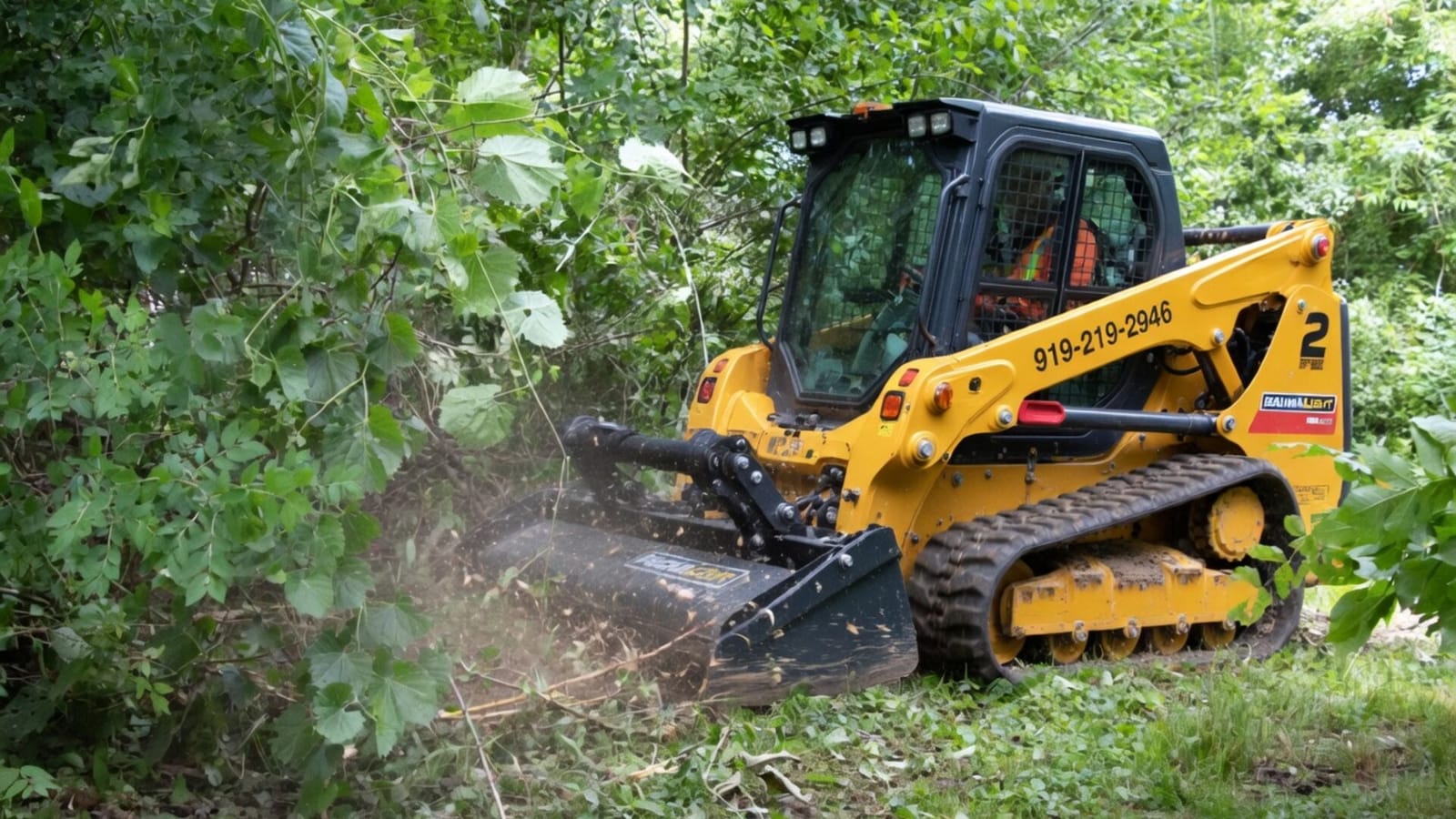
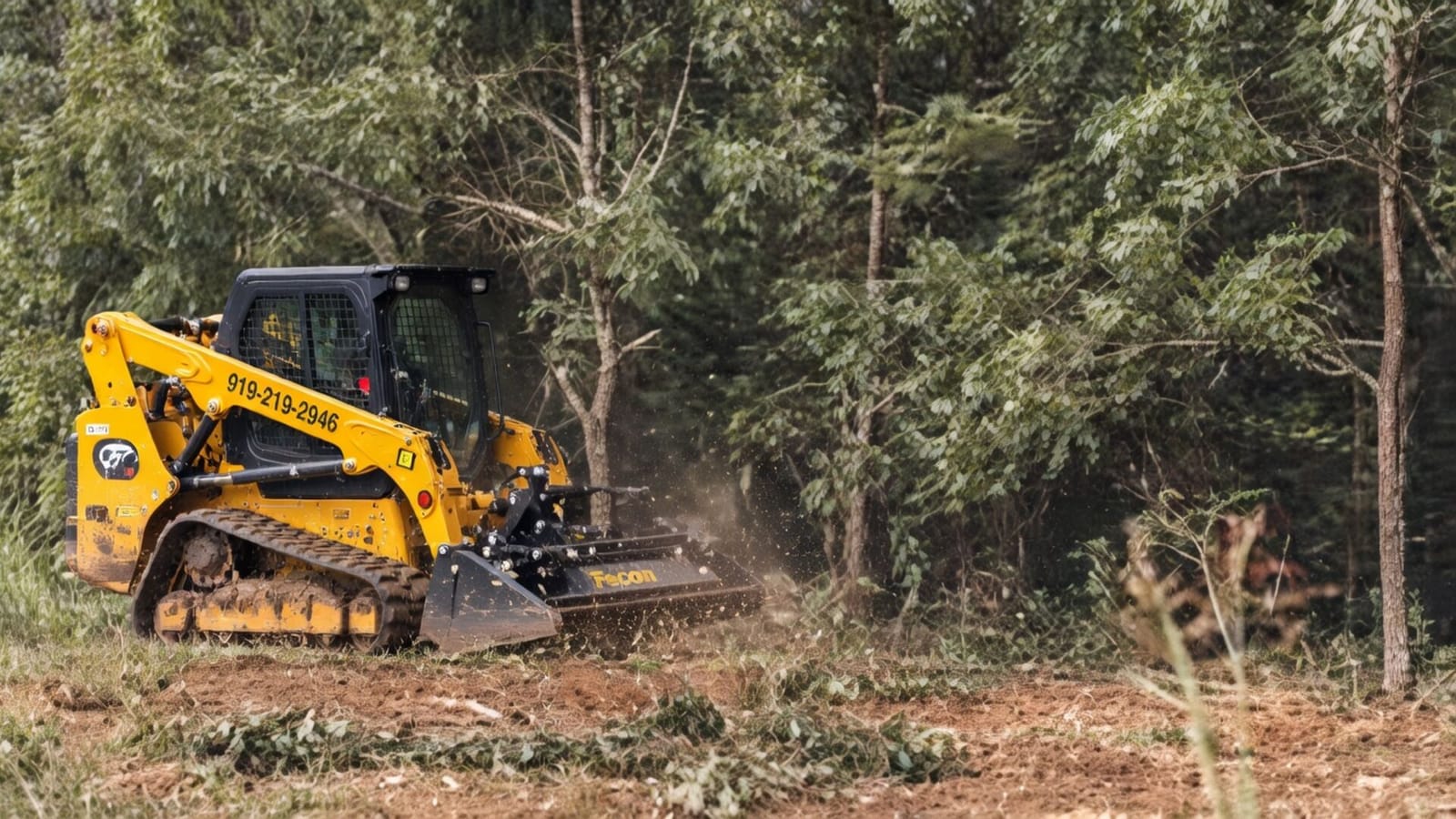
- Mulch the thickets. A forestry mulching machine grinds canes, crowns, and hips into mulch in place. No burn piles, no dragging thorn canes, and the operator sits in a cab instead of wading in with a chainsaw.
- Treat the regrowth. Crowns resprout within weeks. Treating that soft regrowth kills the root systems that mowing alone can’t finish.
- Mow on schedule. An annual or twice-yearly brush hogging pass at $75–$400 per acre mows down seedlings from the 20-year seedbank before they ever get woody. This is the step that makes the clearing permanent.
Fence lines get their own treatment, because the rose is usually woven through the wire. Our fence line clearing crews work the line by hand and machine, and our fence line clearing cost guide covers how that work is priced.
What Does Multiflora Rose Removal Cost in NC?
Mulching multiflora rose thickets in Central North Carolina runs $1,000–$3,500 per acre, with most infested pasture edges landing in the $1,500–$2,500 middle of that range. Scattered bushes across an otherwise open field price toward the bottom; a solid quarter-acre fortress with cedar mixed in prices toward the top.
| Situation | Typical Cost | Timeline |
|---|---|---|
| Scattered rose bushes in open pasture | $1,000–$1,800 per acre | Hours, not days |
| Dense thickets on field edges and corners | $1,500–$2,500 per acre | 1 day for most jobs |
| Fence line woven with rose | $150–$300 per hour | Priced by the line |
| Annual seedling mowing (maintenance) | $75–$400 per acre | Half a day |
If the rose is one part of a larger reclamation, with broomsedge, sweetgum saplings, and cedar claiming the same idle field, the whole job usually prices as one mulching project. Our guide to reclaiming an overgrown pasture walks through that bigger picture, and a free estimate gets you a number for your specific field.
Frequently Asked Questions
How do you get rid of multiflora rose permanently?
Grind the thickets and crowns with a mulcher, treat the resprouts while they’re soft, then mow annually so the seedbank never rebuilds a thicket. The mowing is non-negotiable: seeds already in your soil stay viable up to 20 years, and birds keep bringing more. Permanent control is a cleared field plus a cheap yearly pass.
Can I just bush hog multiflora rose?
You can knock it down, but mowing once a year won’t kill established crowns; extension research says it takes 3–6 mowings per season for at least two years. Bush hogging is the right tool for keeping cleared ground clear and the wrong tool for killing mature thickets. See our bush hogging vs forestry mulching comparison for where the line sits.
Will goats eat multiflora rose?
Yes, goats browse it readily, thorns and all, and repeated heavy browsing over several seasons can kill plants. The catch is time and fencing: goats need to stay on the patch and keep hitting the regrowth. For a one-season reclamation of a horse or cattle pasture around Angier or Zebulon, mulching plus follow-up is faster.
Is multiflora rose illegal in North Carolina?
North Carolina doesn’t require landowners to remove multiflora rose, though several other states list it as a noxious weed. The practical reasons to remove it are your own: reclaimed grazing ground, visible fences, fewer ticks, and protection for ornamental roses from rose rosette disease, which spreads from wild multiflora.
What’s the difference between multiflora rose and wild blackberry?
Check the leaf base and the flowers. Multiflora rose has a fringed, feathery stipule at each leaf base and blooms in clusters of small white roses; blackberry has no fringed stipule and larger five-petal flowers, and its canes are more upright than arching. Both form thorny patches, and a mulcher handles either one the same way.
How long does it take to clear a rose-infested pasture?
Most single-field jobs take one day of machine work. A typical project around Creedmoor or Pittsboro runs a morning to a full day of mulching, a follow-up treatment visit later that season, and then an annual mowing pass. The field is usable again as soon as the mulching is done.
Multiflora Rose Removal Across Central North Carolina
That living fence has had 60 years to dig in, and it still loses to a drum mulcher and a follow-up schedule. If the rose has company, and it usually does, our guide to invasive plants in Central NC covers the whole cast. Cut Brush clears multiflora rose across Central North Carolina’s pasture country, from Person and Granville County farms around Roxboro and Creedmoor to field edges near Pittsboro, Angier, and Zebulon, as part of our invasive species removal service.
Request your free estimate or call (919) 525-3950. We respond within 24 hours, and we’ll price the knockdown and the follow-up honestly, up front.
Related Services
Learn more about the services mentioned in this article.

Forestry Mulching
Single-step land clearing that mulches trees and brush in place.

Fence Line Clearing
Clear vegetation along fence lines to protect fences and improve access.

Brush Hogging
Heavy-duty mowing for overgrown fields, pastures, and large lots.

Invasive Species Removal
Identify and remove invasive plants that threaten native ecosystems.
Serving These Areas
We provide land clearing services in these towns and surrounding areas.
More from the Cut Brush Blog
Keep reading for more tips and guides on land clearing.
 Services
 How to Get Rid of Invasive Honeysuckle in NC
How to get rid of invasive honeysuckle in NC: identify Japanese and bush honeysuckle, why mowing fails, and what removal costs per acre. Get a free estimate.
 Services
 Eastern Red Cedar Removal in NC: Reclaim Your Field
Eastern red cedar removal in NC: why cedars take over idle pasture, why they don't resprout from stumps, removal costs, and when to leave a few. Free estimate.
Services Autumn Olive Removal in NC: Kill the Old Farm Invader
Autumn olive removal in NC: identify the silver-leaf invader, learn why cutting fails, when to treat, and what clearing costs per acre. Get a free estimate.
Let's Get Started on Your Land
Request a free quote. We'll contact you to discuss your property, access, and the clearing you need.
Get a Free QuoteOr call us directly: (919) 525-3950