
Fence Line Clearing Cost in NC: Prices and Quote Checks
Cut Brush Team · July 10, 2026 · 7 min read

Fence line clearing with Cut Brush in Central North Carolina starts around $500 a project. Where a job lands above that depends on three things: how long the line is, how much vine has grown into it, and how easy it is for a machine to reach. A line that has gone back to small trees is priced like forestry mulching, which starts around $1,500 an acre. A line that only needs mowing falls under our brush hogging rates of $75 to $400 an acre.
One rule before any machine starts: in North Carolina, cutting a neighbor’s trees or shrubs without consent can make you liable for triple their value. Know where your line is first.
How much does it cost to clear a fence line?
Our fence line clearing work is quoted as a project, starting around $500, because a fence row is long and narrow rather than a block of acres. When we look at a line before quoting, we are checking the same things that set the price:
- Length. A longer run means more machine time, but the setup is spread over more feet.
- Vine growth. Honeysuckle, rose and privet woven through the wire slow the machine, and the last few feet against the posts get finished by hand.
- Access. A line the machine can drive along from a gate prices better than a back line it has to cut its way in to reach.
- Stem size. Once saplings pass 2 to 3 inches it is not a brush hog job, and the work moves to mulching.
Most residential clearing falls between $1,500 and $4,500 an acre, and our pricing page lists every starting point side by side. Those per-acre figures are the yardstick for checking any fence line quote, including ours.
Is a per-foot quote fair? Convert it to acres
Fence line prices are often quoted by the foot, which makes two quotes hard to compare. Turn the strip into acres and the number becomes something you can check. An acre is 43,560 square feet, so:
Acres = length of line in feet x width of strip in feet / 43,560
For a strip 10 feet wide on one side of the fence:
| Length of line | Acres in a 10-foot strip | Same strip at $1,500 an acre |
|---|---|---|
| 500 feet | 0.11 | about $170 |
| 1,000 feet | 0.23 | about $345 |
| 2,000 feet | 0.46 | about $690 |
| One mile | 1.21 | about $1,820 |
Clearing both sides doubles the acres. The dollar column is a sanity check, not a quote: short lines sit under the cost of bringing a machine out at all, which is why we price fence work as a project from around $500 rather than by the acre.
The same math works in reverse. On a 10-foot strip, every $1 a foot equals about $4,356 an acre. A quote of $5 a foot on that strip works out to about $21,800 an acre, far past the $1,500 to $4,500 an acre that most residential clearing costs. A per-foot number that converts to a per-acre number like that deserves a question.
Width is your choice, not a fixed standard. Some owners want just enough room to walk and repair the wire; others want a lane a truck or tractor can drive. Decide before you ask for prices, because a quote that does not say the width cannot be compared with one that does. A fair fence line quote should state:
- the length of the line and the width of the strip
- one side of the fence or both
- whether the price is the project total or a minimum
- what happens to regrowth afterward, and who handles it
If there is old wire in the row, tell us about it when you request a quote so we can plan for it before the machine arrives.
Whose trees am I clearing if the fence sits on the line?
Often the brush on the far side of a fence belongs to your neighbor, and a fence is not always on the property line. North Carolina law treats that seriously. Under G.S. 1-539.1, anyone who cuts or removes another person’s trees, shrubs or timber without consent is liable to the owner for triple the value of what was cut. The same section lets a contractor who cut because the client misstated the property lines claim reimbursement from that client. In plain terms, the crew clears where you say your land is, and the responsibility for that answer stays with you.
Before the crew arrives:
- Find your corner pins or survey markers, or have the line surveyed if nobody is sure where it runs.
- If the work reaches the neighbor’s side, talk with them first and agree on what gets cut.
- Check your deed and plat for any easement along the fence.
There is no state rule that splits a shared fence between neighbors. North Carolina’s division fence articles in Chapter 68 were repealed, so who maintains a boundary fence, and who clears along it, comes down to what the two owners agree. The same chapter makes letting livestock run at large a Class 3 misdemeanor, so if animals use the pasture, plan for them before any wire comes down. This is what the statutes say, not legal advice; a disputed line is a question for a surveyor or an attorney.
Will the fence line grow back after clearing?
Yes, unless the stumps get follow-up. Privet, autumn olive, bush honeysuckle and multiflora rose are resprouting shrubs: cut or mulch them and they come back from the root. On a fence row, that is most of what grows.
Stopping the resprouts is a separate step from the clearing, and it is time sensitive. A cut-stump herbicide treatment goes on within five minutes of the cut, and it is the work of a licensed applicator who follows the label. Cut-surface treatments work from mid-February through most of the growing season and are less effective in midwinter. That matters because many owners want their line cleared in winter, when the vines are down and the wire is easier to see. Winter is a fine time to clear, but if stump treatment is part of the plan, ask who does it and when before you book the date.
Each of these plants has its own habits. Our guides to Chinese privet, multiflora rose and invasive honeysuckle cover what to expect from each one.
Keeping a cleared line open costs far less than clearing it again. A 10-foot strip along a mile of fence is about 1.21 acres, which comes to roughly $91 to $485 at our brush hogging rates, so a yearly mowing pass usually bills at the $250 to $500 minimum per visit. Our brush hogging cost guide breaks those rates down by field condition.
Will a brush hog clear a fence row?
Only if the row is still mostly grass, briars and thin stems. A brush hog handles growth up to saplings of 2 to 3 inches; past that, the line needs a mulching head. Fence rows left alone for years often have trees growing in or through the wire, which puts them in mulching territory.
If the fence line is the edge of a whole field going back to woods, price the line and the field together. Our guide to reclaiming overgrown pasture in NC covers that larger job.
Frequently asked questions
How much does it cost to clear a fence line per foot?
We do not quote fence lines from a per-foot table. Our fence line clearing starts around $500 a project, set by the length, the vine growth and the access. To compare any per-foot quote with per-acre prices, multiply the length by the strip width and divide by 43,560 to get acres.
How wide should a fence line be cleared?
Wide enough for how you will use it: room to walk and repair the wire, or a lane for a truck or tractor. A 10-foot strip along 1,000 feet of fence is about 0.23 acres; clearing both sides doubles it.
Do I need my neighbor’s permission to clear the fence line?
To cut anything on their side, yes. Cutting another owner’s trees or shrubs without consent can make you liable for triple their value under G.S. 1-539.1. On your own side of a known line, that statute does not apply, though an easement in your deed still can.
What should I tell you about old wire?
Tell us about any old wire, gate posts or corner braces you know of when you request the quote, and flag what you can find along the line before the crew arrives. Wire hidden in the brush is one of the main things that slows a fence line job.
Get a Fence Line Clearing Quote in Central North Carolina
Fence line clearing with Cut Brush starts around $500 a project, and the real number comes from the line itself. Request a free quote and our crew will contact you to talk through the property, the access and the clearing you need. You can also call (919) 525-3950 and tell us about the fence.
Related Services
Learn more about the services mentioned in this article.


Serving These Areas
We provide land clearing services in these towns and surrounding areas.
More from the Cut Brush Blog
Keep reading for more tips and guides on land clearing.
 Cost Guide
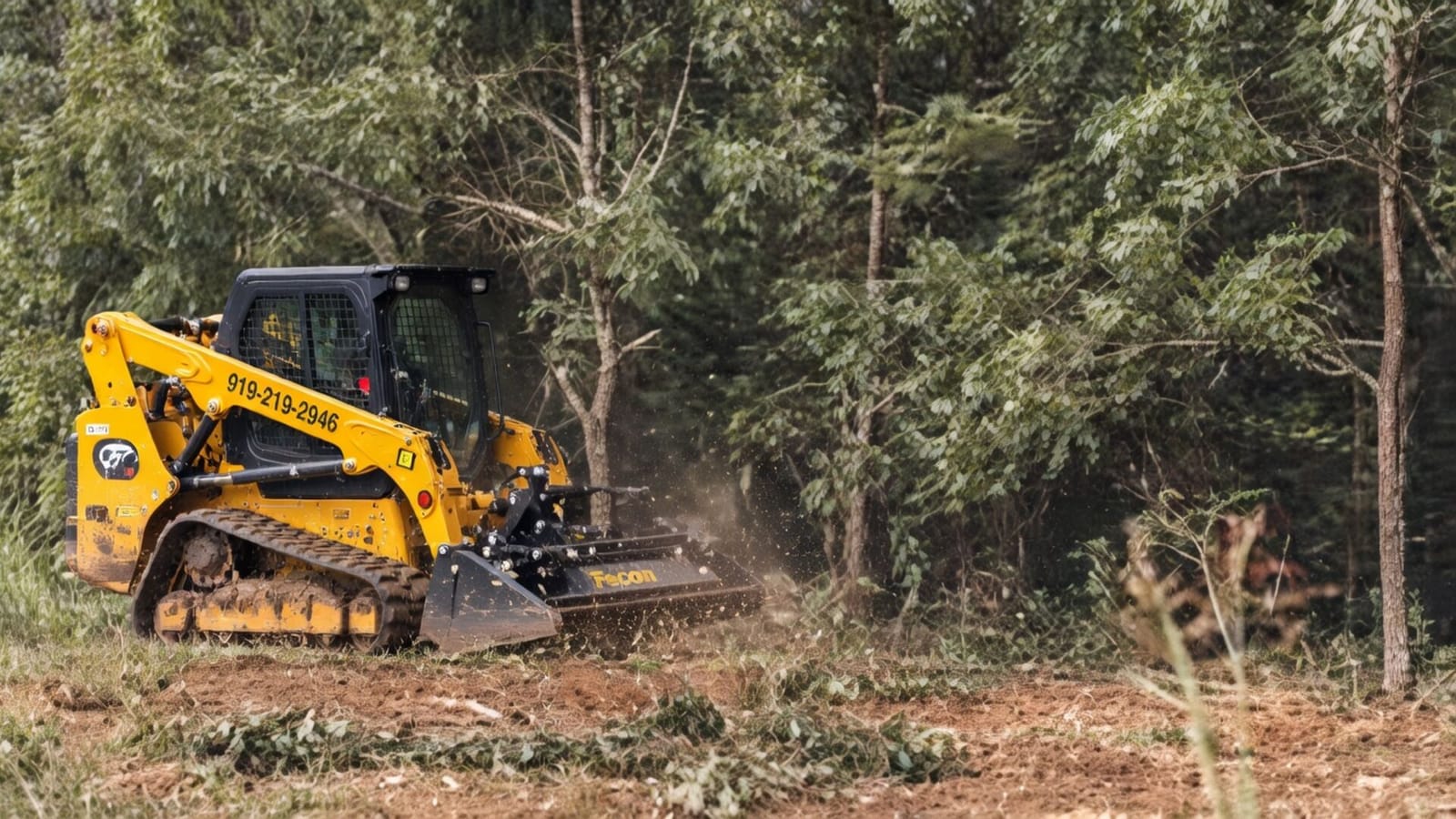
 Forestry Mulching Cost Per Acre in NC (2026 Prices)
Forestry mulching cost per acre in NC by brush density, the hourly rate, and how lot size moves the price, from local Central NC jobs. Call 919-525-3950.
 Cost Guide
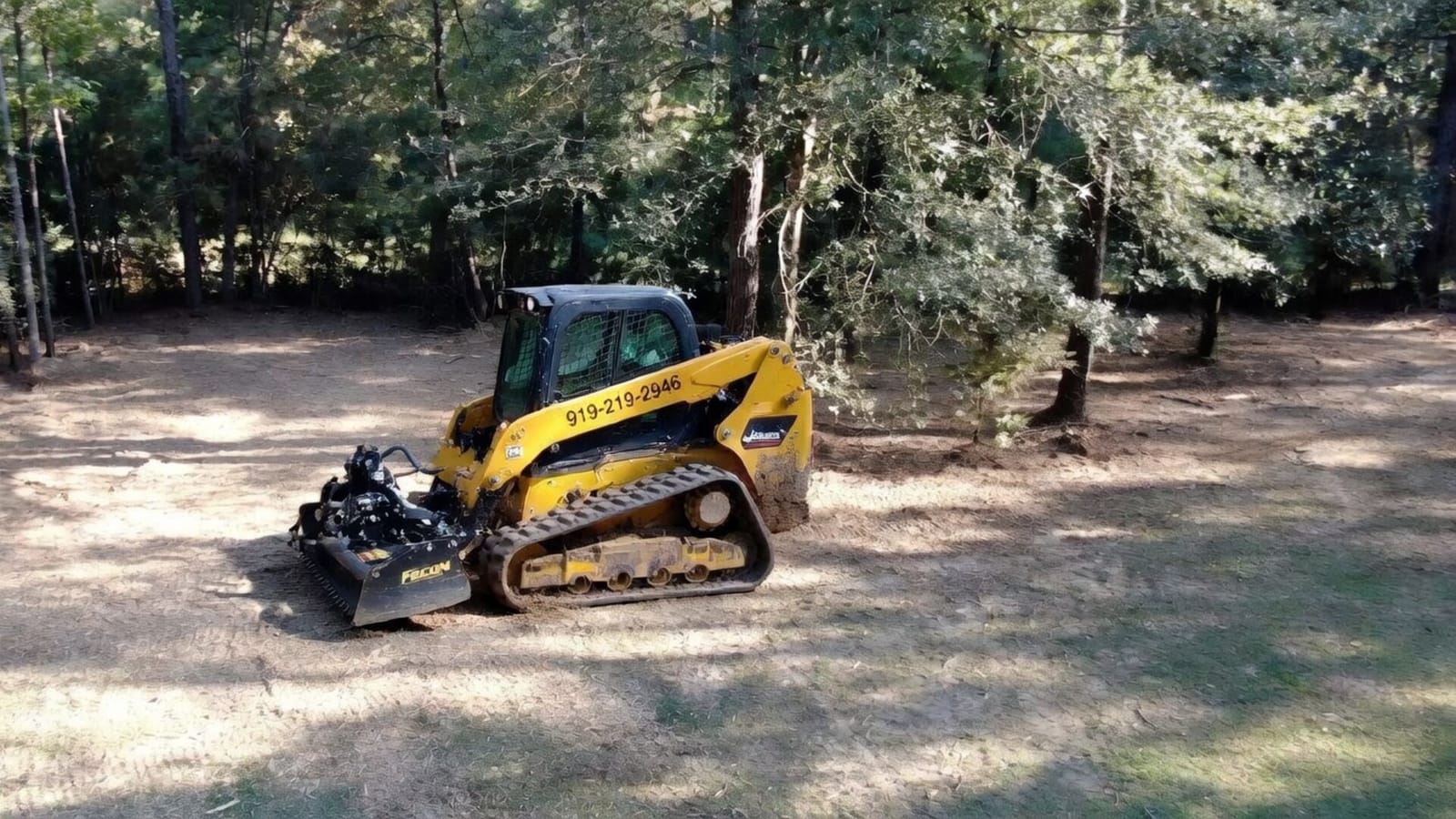
 Cost to Clear 5 Acres in NC: 2026 Prices and Permits
Clearing 5 acres in NC starts around $7,500 with forestry mulching; five wooded acres run $7,500 to $22,500. What moves the price, and the erosion plan rule.
 Cost Guide
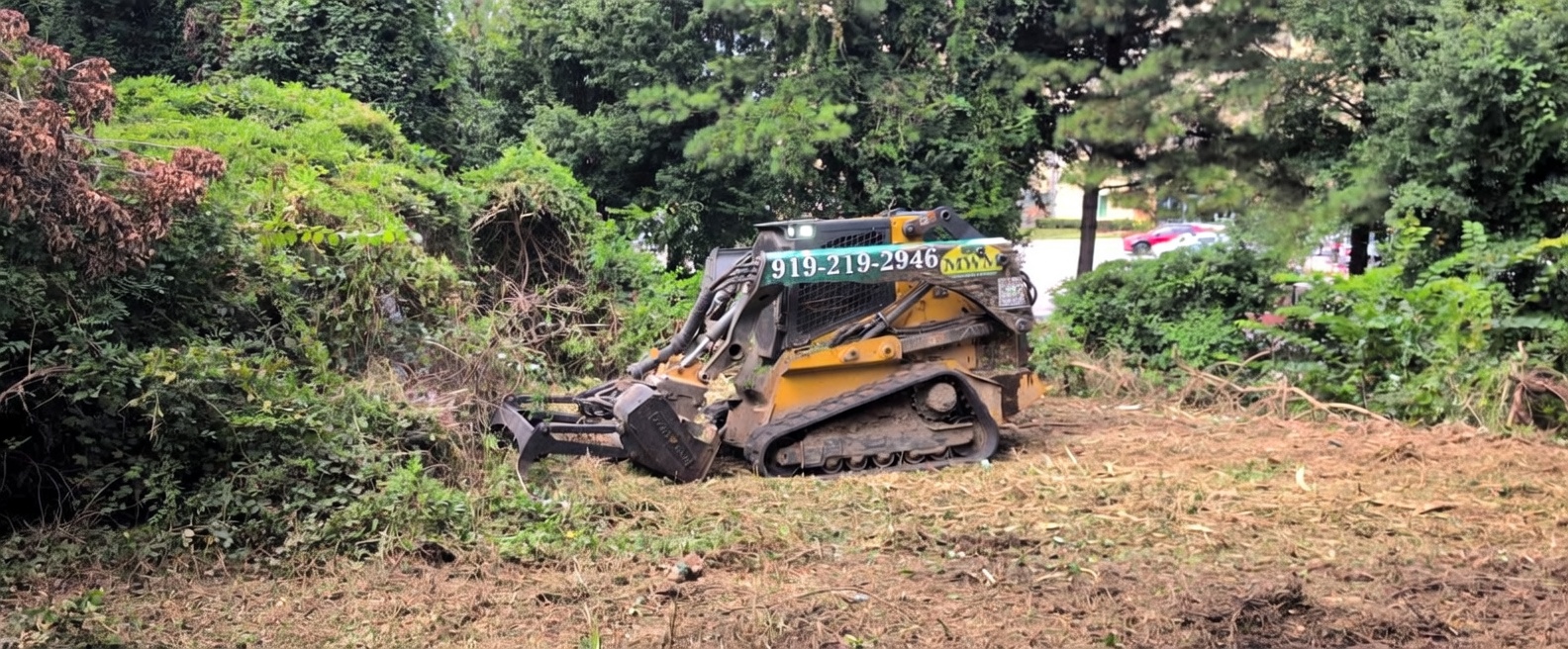
 Brush Hogging Cost Per Acre in NC (2026)
Brush hogging cost per acre in NC runs $75–$400 for most fields. See 2026 pricing by field condition, hourly rates, and ways to save. Call 919-525-3950.
Let's Get Started on Your Land
Request a free quote. We'll contact you to discuss your property, access, and the clearing you need.
Get a Free QuoteOr call us directly: (919) 525-3950