Land Clearing in Cumberland County, NC
Cut Brush Team · September 24, 2026 · 7 min read
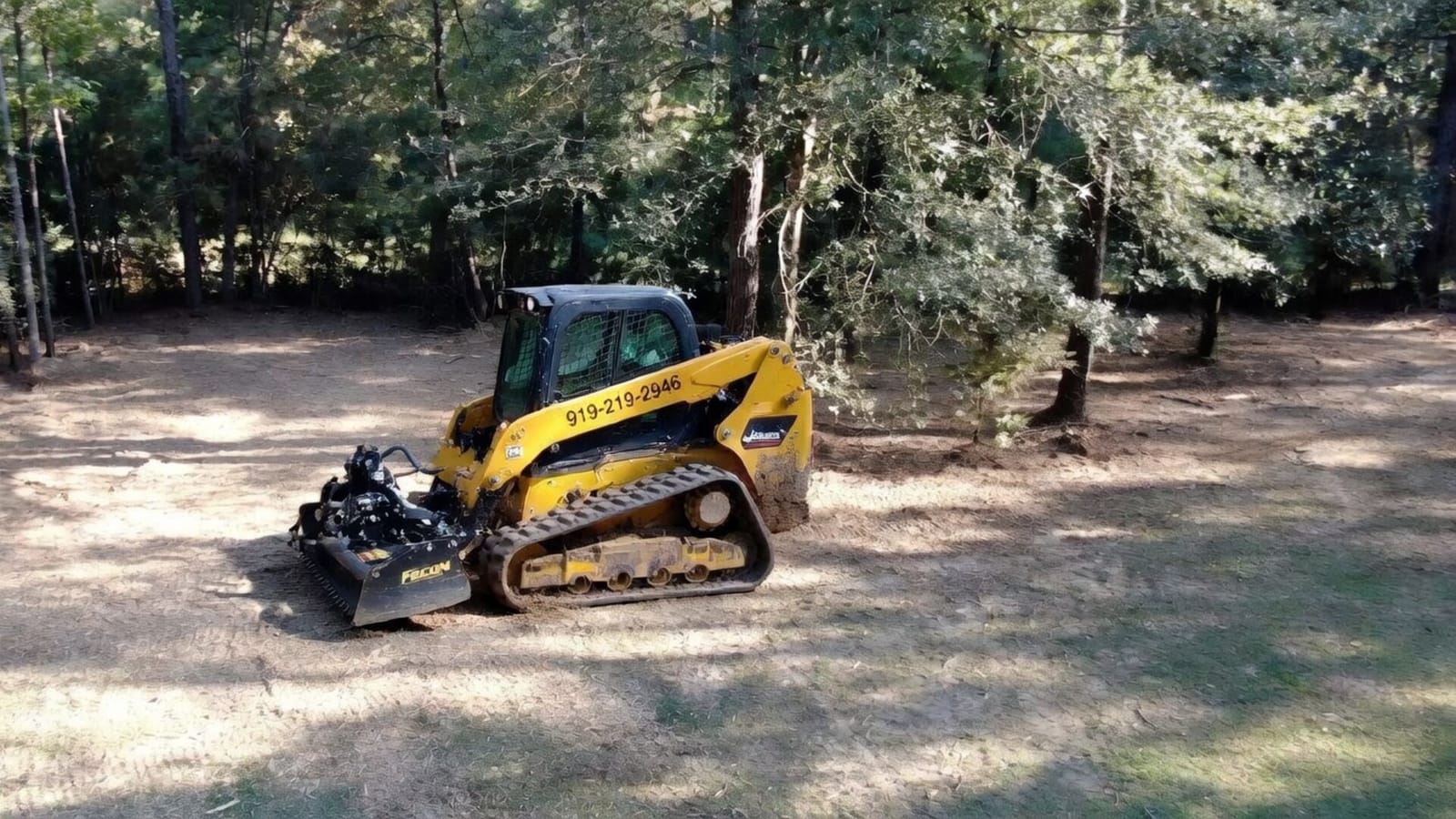
Cumberland County land does not behave like the red clay farther north. West of the Cape Fear River, you are standing on Sandhills sand under longleaf pine and scrub oak. East of it, the ground flattens into Coastal Plain loam with wetter creek bottoms. Land clearing in Cumberland County NC works best when the plan fits that ground, and when you know which permit and burning rules apply before a machine arrives.
This guide covers what clearing costs here, what the city, county, and state require, what grows on a typical lot, and how to get a flat quote for property in Fayetteville, Hope Mills, Spring Lake, or next door in Raeford.
What Makes Cumberland County Land Different?
The county straddles two landscapes. The Sandhills cover much of the west side, including Fort Bragg, Spring Lake, and a large part of west Fayetteville. Many parcels there sit on deep, loose sand that usually drains faster than clay, though clay layers, low spots and compacted ground vary from one lot to the next. On well-drained sand, tracked equipment can sometimes return to work soon after a storm; we check the ground on each parcel before scheduling. The tradeoff is erosion: sand stripped of its cover can wash into ditches and streets in a heavy rain, and it can blow on dry, windy days.
The Cape Fear River splits the county roughly north to south. East of it, toward Eastover, Stedman, and Wade, the soils are generally loamier and hold more water. Creeks such as Cross Creek, Little Rockfish Creek, and the Little River cut through both sides, and their bottoms often stay damp much of the year.
Pro tip: If your parcel has standing longleaf pine, decide what you want to keep before anyone quotes a full clear. Clearing the understory around good pines usually costs less than clearing everything, and the trees add value to a homesite.
What Grows on a Cumberland County Lot?
The native Sandhills mix is longleaf pine, turkey oak, and wiregrass, a community that depends on frequent low fire. When fire stays out, the ground under the pines fills with turkey oak, blackjack oak, and loblolly seedlings until you cannot walk through it. Much of the unburned rural acreage in the western half of the county looks like that.
Old fields and vacant lots grow up in loblolly pine, sweetgum, blackberry, and greenbrier within a few seasons. Creek bottoms carry sweetgum, red maple, water oak, and bay, with Chinese privet and wisteria moving in along the edges. Each of these calls for a slightly different approach. Forestry mulching handles most of them in one pass and leaves a mulch layer that helps hold the sand in place, though how well it holds depends on slope, rainfall and how much ground cover was left.
How Much Does Land Clearing Cost in Cumberland County NC?
Most residential clearing in Cumberland County falls between $1,500 and $4,500 per acre, the same band we use across Central North Carolina. Where a job lands in that range comes down to acreage, vegetation density, slope, and access.
| Service | Starting point | What moves the price |
|---|---|---|
| Forestry mulching | around $1,500 per acre | Scrub oak on sand at the low end, dense hardwood bottoms higher |
| Land clearing | around $1,500 per acre | Mature woods and wet ground run higher |
| Brush clearing | around $1,200 per project | Lot size, brush density, terrain |
| Brush hogging | around $75 per acre | Open fields low, grown-up pasture higher |
| Fence line clearing | around $500 per project | Fence length and vine growth |
These are general starting figures, not quotes. Our pricing page explains each factor. In practice, clearing understory between pines on a dry sand ridge sits near the bottom of the range, while a wet, shaded parcel along a creek sits near the top.
Do You Need a Permit to Clear Land in Cumberland County?
It depends on where the parcel is, how much ground you disturb, and what the clearing is for. Several layers can apply, and each is checked separately.
State erosion and sedimentation control plan. Under North Carolina’s Sedimentation Pollution Control Act, an approved erosion and sediment control plan is required when more than one acre of land on a tract will be disturbed. Farming, and timber production that follows the state’s forest practice guidelines, are generally exempt (NC DEQ, erosion and sediment control laws and rules). Plans are approved either by a local government program or by a DEQ Land Quality regional office. Cumberland County, Fayetteville, and Hoke County do not run their own delegated programs, so plans here go to DEQ, through its Fayetteville Regional Office. The plan has to be approved before work starts.
State construction stormwater permit. This is a separate layer. NC DEQ’s NPDES construction stormwater permit covers construction that disturbs one acre or more, and also smaller sites that are part of a larger common plan of development of that size, such as one lot in a subdivision (NC DEQ, NPDES construction program). A lot under an acre is not automatically clear of state requirements if it belongs to a larger plan. Our NC land clearing permit guide explains the statewide picture.
Fayetteville’s Clear-Cutting Permit. Inside city limits, UDO Section 30-2.C.9 requires a Clear-Cutting Permit before any clear-cutting or significant land-disturbing work that would impact healthy trees, unless an exemption applies (City of Fayetteville, Section 30-2.C.9). The standards call for a 30-foot buffer along property lines that adjoin other properties and a 50-foot buffer along streets, unless an alternative buffer is installed or a site plan is submitted within six months. Trees greater than 30 inches in caliper are specimen trees: removing one takes a survey and a written case for removal, and if the city approves, the fee is $100 per caliper inch. Land in agricultural, horticultural or forestry production taxed at present-use value is exempt as long as a vegetated perimeter buffer is kept, as is the removal of a severely diseased, dead or dying tree. The application and a staff contact are on the city’s site plan and subdivision approval page.
Town zoning. Hope Mills runs its own planning department, and parcels in its Municipal Influence Area must meet both town and county standards. In Spring Lake, Cumberland County Planning and Inspections handles most planning items for the town. Unincorporated land falls under county zoning.
The clearing method can matter, but it does not settle the question by itself. Mulching leaves roots and more ground cover in place than grubbing to bare sand, yet either can count as land-disturbing activity depending on the scope. Confirm with the right office before a large project; we work to the approved scope and the permits you hold.
Can You Burn Clearing Debris in Cumberland County?
Sometimes, and rarely inside Fayetteville. The city prohibits open burning of yard debris year-round within city limits, and a land-clearing burn there needs a permit from the Fire Marshal (City of Fayetteville, open burning).
Outside the city, the NC Forest Service requires a free burn permit for burning in or near woodland, available online or from a county office. State air quality rules add more for land-clearing debris: the fire must be at least 500 feet from occupied structures and 250 feet from any public road, burning runs only from 8 a.m. to 6 p.m., and it is allowed only when the air quality forecast is Code Green or Code Yellow. Residential yard debris may be burned only where local ordinances allow it and public pickup is not available (NC DEQ, open burning).
Cumberland County also issues burn bans in dry spells. As of September 2026, the most recent took effect March 28, 2026 (Cumberland County) and was lifted May 3, 2026. A statewide ban overrides any permit. Grinding brush on site avoids the burn question altogether, which is why many owners here choose land clearing by mulching.
Where We Work in and Around Cumberland County
Cut Brush’s own crew covers Cumberland County and neighboring Hoke County as part of our home North Carolina service area.
- Fayetteville: selective clearing that keeps good trees and follows the approved scope and the city’s tree requirements.
- Hope Mills: new homesites off Elk Road and Rockfish Road, and lots sloping toward the lake and Little Rockfish Creek.
- Spring Lake: overgrown rentals and vacant lots, including for owners who have moved away.
- Raeford: Hoke County acreage where the longleaf stays and the scrub oak goes.
For rural homes backed by thick woods, defensible space clearing thins fuel near the house, which matters in fire-adapted pine country. For yard edges and fence lines, our brush clearing service handles privet, greenbrier, and blackberry.
Get a Quote for Land Clearing in Cumberland County NC
Tell us where the property is, what is growing on it, and what you want it to become. We respond within 24 hours with a flat price and schedule most jobs within one to two weeks. Request your free quote today.
Related Services
Learn more about the services mentioned in this article.

Brush Clearing
Remove overgrown brush, shrubs, and small trees to reclaim your land.

Forestry Mulching
Single-step land clearing that mulches trees and brush in place.

Land Clearing
Full land clearing for residential and commercial development projects.

Defensible Space & Firewise Clearing
Reduce wildfire fuel around your home using the Firewise three-zone framework.
Serving These Areas
We provide land clearing services in these towns and surrounding areas.
More from the Cut Brush Blog
Keep reading for more tips and guides on land clearing.
County Guide Land Clearing in Durham County, NC (2026 Guide)
Land clearing in Durham County, NC: permit thresholds, Falls Lake rules, costs, and methods for urban infill and wooded lots. Get a free estimate today.
 County Guide
 Land Clearing in Harnett County, NC (2026 Guide)
Land clearing in Harnett County, NC: Angier growth, permit rules, costs, and methods for farmland and wooded lots. Get a free Central NC estimate today.
 County Guide
 Land Clearing Services in Wake County, NC
Land clearing in Wake County, NC – costs per acre, clearing methods, permits, and timelines. Get a free estimate or call 919-525-3950.
Ready to Get Started on Your Land?
Get a free, no-obligation estimate for property in Central North Carolina.
Get Your Free QuoteOr call us directly: (919) 525-3950