
Bamboo Removal in NC: Timeline, Buffers and Neighbors
Cut Brush Team · July 18, 2026 · 7 min read

Running bamboo in North Carolina can be brought under control, but not in one visit: plan on two to three years. Cutting the canes leaves the rhizomes alive in the soil, and they send up new shoots. What works is cutting the grove to the ground, then removing every flush of regrowth, by repeated cutting or mowing, by an applicator’s herbicide on the new leaves, or both, until the rhizomes run out of stored energy.
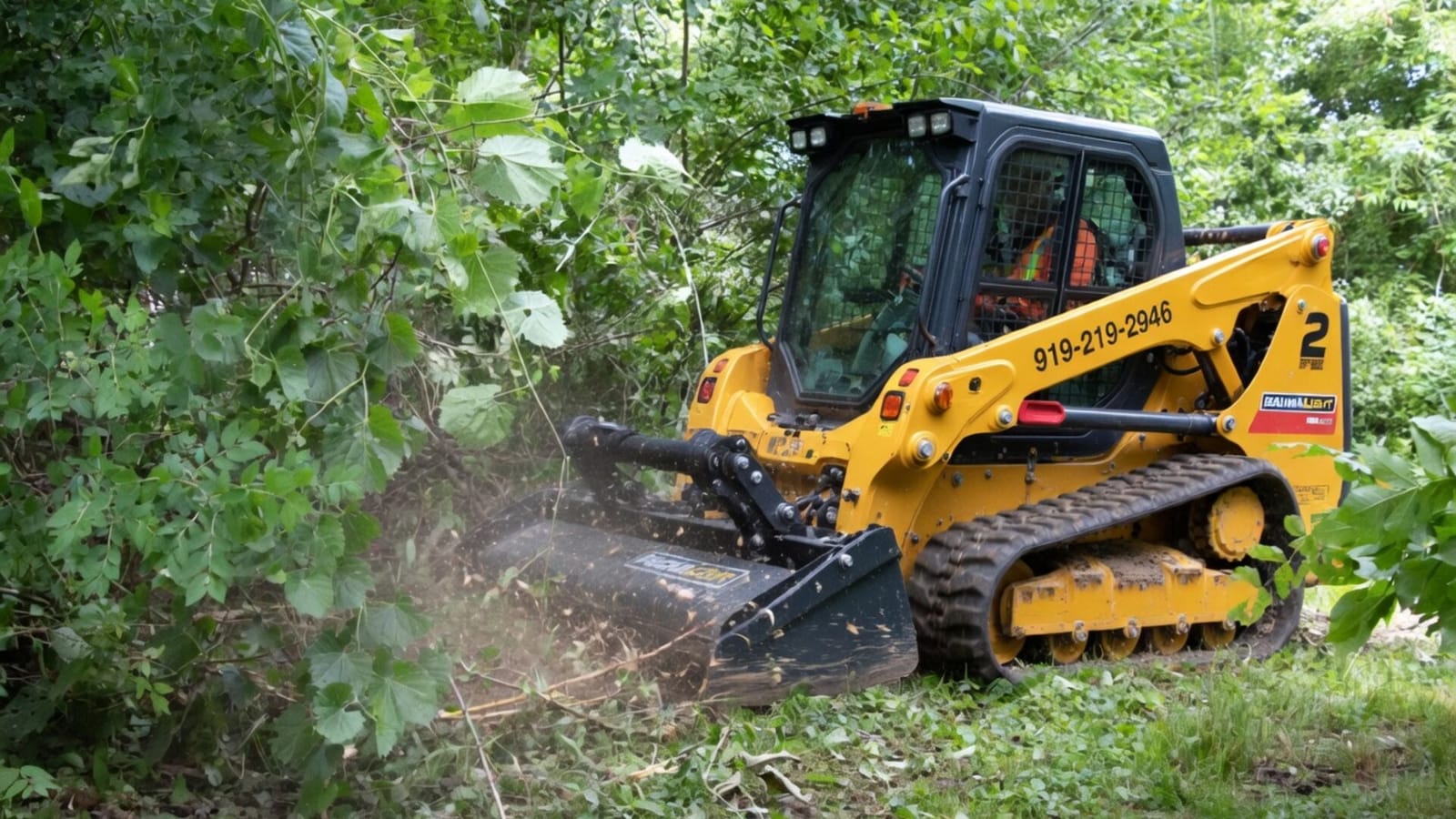
Cut Brush does the cutting. Our crew mulches the grove where it stands and comes back to cut regrowth. We do not spray; herbicide is a licensed applicator’s work, from a separate company.
Do You Have to Get the Roots Out, or Will It Just Come Back?
It will come back, and you cannot dig out every root. Rhizomes usually sit less than a foot deep but run sideways, and on open ground they can reach a hundred feet or more from the grove. Any fragment left behind can sprout, which is why the goal is to starve the network, not to find all of it.
Starving it is simple and slow. Bamboo cannot survive weekly mowing, so lawn the shoots come up in can be held with a mower. A small stand can be worn out by cutting or mowing its stems for successive years until the rhizomes’ reserves are spent. A large stand usually needs herbicide on the regrowth as well, and even then the site needs watching for sprouts for years.
Digging the rhizomes out with a machine is the other route. It leaves compacted, torn-up ground that may need regrading, misses fragments that re-sprout, and a large excavation may need a local permit. That is excavation and grading work, which we do not do.
Who Cuts It, Who Sprays It, and When
Bamboo control is two jobs on one calendar. Our crew handles the machine work; a separate applicator handles any herbicide. Here is the order, and who does each step:
| Step | When | Who |
|---|---|---|
| Mulch the grove to the ground | Before the applicator’s window, so the regrowth comes up where they can reach it | Cut Brush |
| New shoots come up | A 6 to 12 week window between March and May | You: knock tender shoots over and check weekly |
| Herbicide on the new leaves | Late fall, or early spring when it is above 65°F; mid-September to mid-October on Maryland’s timing | A separate licensed applicator |
| Return cuts on regrowth | Through the growing season, as the flushes come | Cut Brush, or your mower on lawn edges |
| Watch for sprouts | Two to three years for control, then checks for years after | You, with us on call |
Cutting first matters for the herbicide step. Spraying tall standing canes misses most of the plant; spraying the unfurled leaves of low regrowth reaches it. The applicator chooses the product and the rate; we set the cutting schedule around their visits.
Our return visits run through our property maintenance service, and we plan them with the first cut, so you know what the first season looks like before we start. The invasive species removal page explains why we stay mechanical.
Can I Clear Bamboo Out of the Creek Buffer Behind My House?
Ask before anyone clears inside a buffer. Bamboo spreads fastest in moist soil, so groves often run straight down to a creek, and in the Neuse River basin the protected buffer is 50 feet wide: a 30 foot Zone 1 next to the water and a 20 foot Zone 2 beyond it.
The rule lists removal of understory nuisance vegetation as deemed allowable, needing no approval, and in Wake County non-native invasive plants may be removed in either buffer zone. Neither names bamboo, that work still has to keep vegetation and soil disturbance to a minimum, and significant removal means replanting with non-invasive species. So whether your grove can come out, and how, is a question for the buffer authority before a machine goes in. For Neuse determinations that is the DEQ Raleigh Regional Office, 919-791-4200; inside Wake County, start with the county’s watershed office. Other parts of the Triangle drain to waters with their own buffer rules, so confirm which one covers your lot.
When the answer is yes, a mulcher suits the job: it cuts the canes at the surface and leaves the chips on the ground instead of digging or hauling. Our guide to Neuse River buffer rules for land clearing covers the zones in more detail.
The Bamboo Is Coming From My Neighbor’s Yard. What Can I Do?
Work on your own side of the line, and get the neighbor’s permission for anything past it. Under North Carolina law, someone who enters another person’s land and cuts or removes valuable shrubs or trees owes the owner triple their value. The statute does not mention bamboo, and that is not a question to settle by cutting first. If you want to know what you can require of a neighbor, ask a lawyer.
On your side, you have two choices:
- Keep cutting the shoots. Shoots that come up on your land can be cut, mowed or mulched as they appear. It holds the line as long as you keep at it.
- Put in a barrier. A rhizome barrier is an option you can arrange, and the trench often needs a mini excavator. The spec that holds: a 30 to 36 inch wide roll of polypropylene or HDPE at least 60 mil thick (80 mil for a mature grove), set with 6 to 8 inches left above ground so you can see and cut any rhizome that tries to climb over. Backfill and compact the trench, and keep mulch away from the exposed lip.
The rhizomes on both sides belong to one plant, so the job works best when both neighbors cut on the same schedule.
What a Mulcher Does to a Bamboo Grove
A forestry mulcher grinds standing canes into chips where they stand, so there is no pile to haul or burn. It cuts at the surface; it does not pull rhizomes, so the grove will push new shoots, and that is expected, not a failure.
Before we quote, we walk the edges: how far shoots have travelled from the main stand, whether the grove runs toward a creek or a property line, and what sits in the way. A grove wedged between a shed, a fence and a drainage swale takes longer than the same grove in an open backyard, and soft creek-side ground slows a machine.
What Does Bamboo Removal Cost in the Triangle?
A backyard grove generally prices as a brush clearing project, starting around $1,200; most of those run $1,200 to $3,500. Larger stands price as forestry mulching, around $1,500 an acre, and most residential clearing in Central North Carolina falls between $1,500 and $4,500 an acre. Return cuts are quoted with the first visit. Any herbicide is priced by the applicator, not by us. Our pricing page shows how acreage, density and access move the number.
Frequently Asked Questions
Is bamboo invasive in North Carolina?
Yes. Golden bamboo (Phyllostachys aurea) is the most commonly planted bamboo that has gone wild in the state, it is on the NC Invasive Plant Council’s invasive list, and its stems run 1 to 6 inches thick. Our guide to invasive plants in Central NC puts it next to privet, kudzu and the rest.
Will mowing kill bamboo?
Weekly mowing will wear it down where a mower can reach, which is how shoots in lawn are held. A grove of mature canes is past a mower, which is where we come in for the first cut.
How long until the bamboo stops coming back?
Two to three years for control if you stay on it, then occasional checks for years. No single visit ends it, from us or anyone else.
I’m in the Charlotte area. Is this the same?
The plant and the method are the same, but the buffer rules and pricing differ. See our Charlotte bamboo removal guide.
Get Bamboo Cut Back in the Triangle
Request a free quote and our crew will contact you to talk through the property, the access and the clearing you need, including where a buffer or a property line limits the work. You can also call (919) 525-3950. We serve Raleigh, Durham, Chapel Hill, Cary, Morrisville and the rest of Central North Carolina.
Related Services
Learn more about the services mentioned in this article.


Serving These Areas
We provide land clearing services in these towns and surrounding areas.
More from the Cut Brush Blog
Keep reading for more tips and guides on land clearing.
 Services
 Chinese Privet Removal in NC: Regrowth, Plan and Cost
Cut privet sprouts back within about 6 months. Our NC plan: we mulch the thicket and re-cut regrowth, a licensed applicator treats stumps. From about $1,200.
Services How to Get Rid of Invasive Honeysuckle in NC
How to get rid of invasive honeysuckle in NC: identify Japanese and bush honeysuckle, why mowing fails, and what removal costs per acre. Get a free estimate.
Services Kudzu Removal in NC: How Long It Takes and When to Cut
Kudzu removal in NC takes several growing seasons: a mulcher clears the mat, the crowns regrow, and return cuts wear them down. Timeline, calendar and costs.
Let's Get Started on Your Land
Request a free quote. We'll contact you to discuss your property, access, and the clearing you need.
Get a Free QuoteOr call us directly: (919) 525-3950