
Clearing Land for a Mobile Home in NC: Septic and Pad Rules
Cut Brush Team · July 6, 2026 · 8 min read

Clear a mobile home site in two stages. Before the septic evaluation, cut only enough to walk and reach the area, with no grading and machines only on dry ground, because disturbed soil can make a site unsuitable or get an issued septic permit revoked. After the permit, clear the home site, driveway and utility route, staying out of the septic areas. At set-up, vegetation under the home must be cut to 2 inches and stumps and sod kept out of footing areas.
Cut Brush does the clearing. The soil evaluation comes from county environmental health, the pad grading from a grading contractor, the septic system from an installer and the set-up from a set-up contractor. The county rules below are Johnston County’s, with Wake County where noted; other counties run their own offices, so call yours before work starts. This guide covers manufactured and mobile homes; for a stick-built house, see land clearing for new construction in NC.
What order do permits and clearing go in?
Settle the septic question first, ideally before you buy. A site without room for both an initial septic system and a repair area is unsuitable, and a full clearing on land that will not perc is money you do not get back. Here is the usual order, with Johnston County’s offices:
| Step | Who handles it | What it needs from the clearing |
|---|---|---|
| 1. Rough-stake the septic area and stake where the home will sit | You | Lanes cut so the stakes can be reached |
| 2. Zoning or land use permit | County planning and zoning | Nothing yet; it sets the setbacks for your home site |
| 3. Soil evaluation and septic layout permit; well permit if you are drilling | County environmental health | Easy walking access, soil left as it is |
| 4. Clear the home site, driveway and utility route | Our crew | Initial and repair areas left untouched |
| 5. Grade the pad and drainage ring; install the septic system | Grading contractor; septic installer | Stumps and sod out of footing areas |
| 6. Set-up permit and set-up | Set-up contractor | A cut, open home site |
| 7. Underside and final inspections, then power and water | County inspections | Grass under the home 2 inches or less |
In Johnston County, permit fees total $405 for a single-wide and $470 for a double-wide, and the zoning permit, the well permit and the septic layout permit are among the items needed. Power and water stay off until every inspection has passed. In Wake County, the set-up contractor installing the home is the party that obtains the permits, and septic and well permits are separate.
How do I clear for the septic evaluation without ruining it?
Clear for access, not for looks. In Johnston County, the property must be cleared (mowed, bush-hogged and the like) so the evaluator can get around easily, the existing soil must not be disturbed or the lot reshaped in any way, and heavy equipment should clear only in dry conditions. Disturbance or construction in the area permitted for the septic system or its repair area can get an issued permit revoked.
That rules out the usual first instinct, which is to push everything flat. Here is how our crew handles the access stage:
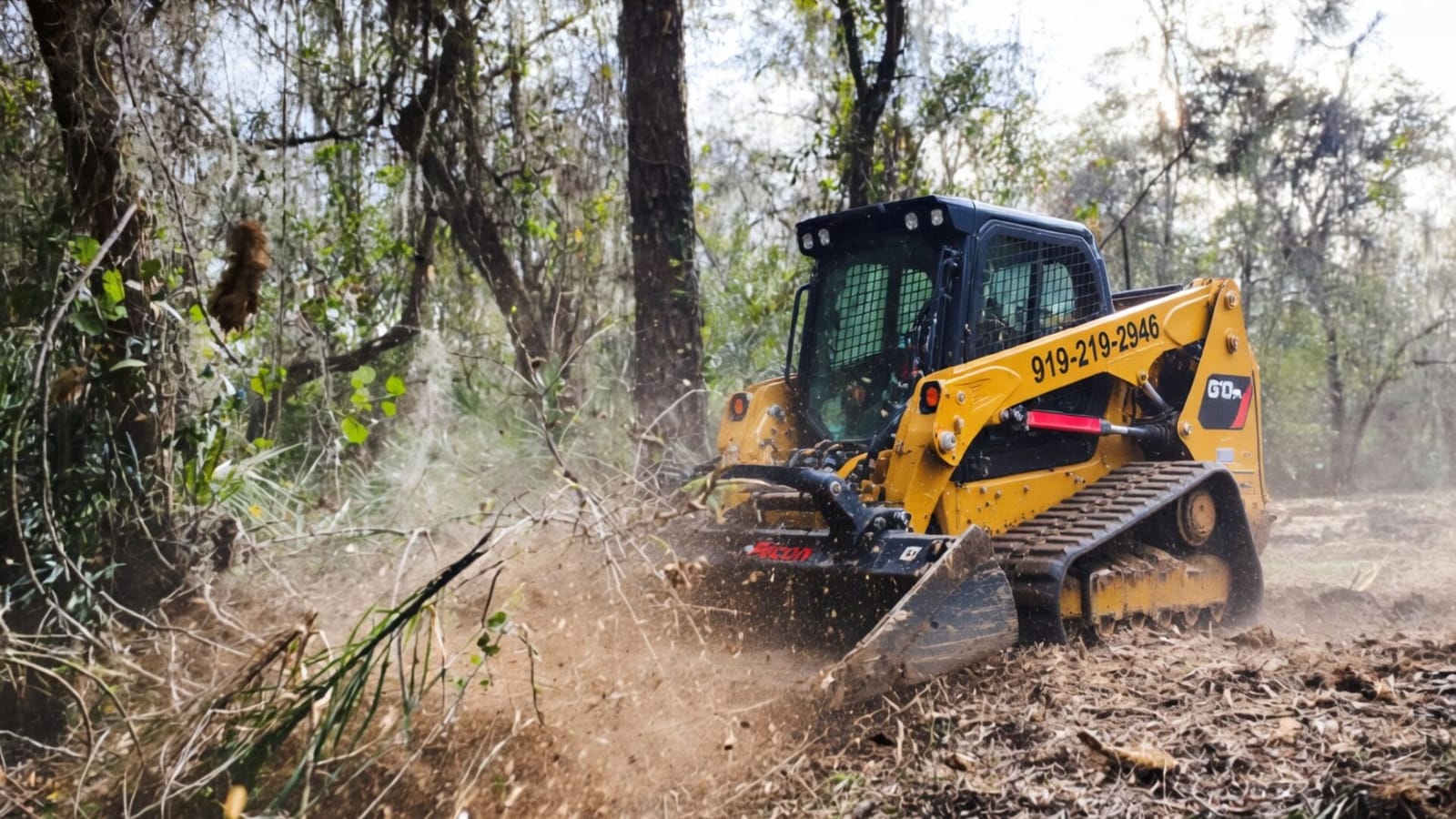
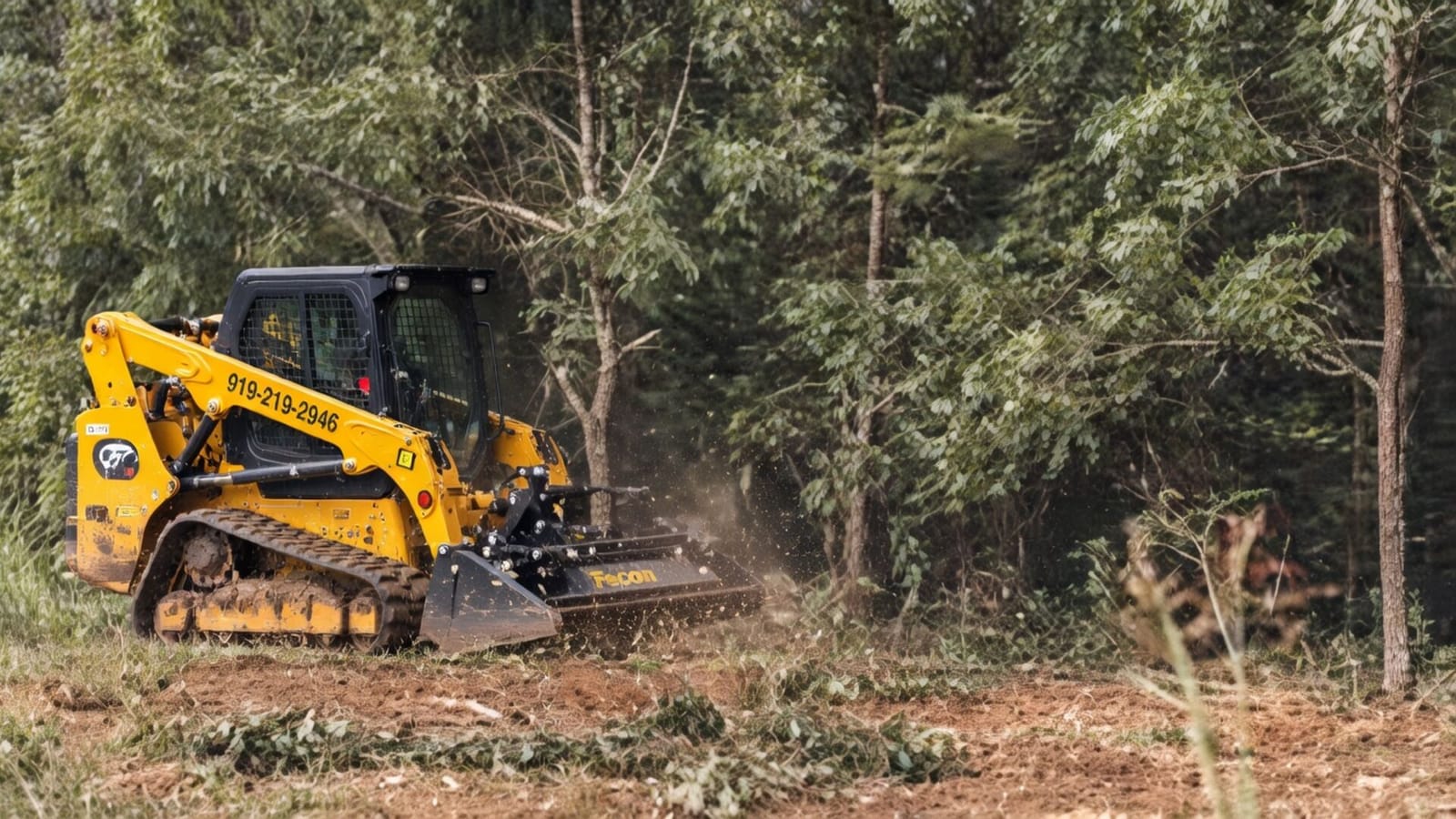
- We cut, we do not dig. Brush hogging or a mulching head takes brush and small trees down at ground level and leaves the stumps, roots and soil where they are. No blade work, no root raking.
- We wait for dry ground. Heavy equipment clearing belongs on dry soil only, so a wet week moves the date.
- We cut lanes to your stakes. The evaluator needs to reach the area you rough-staked and the spot marked for the home, not a cleared acre.
Once the layout permit marks the initial and repair areas, clear them only as the health department allows. Neither area may be altered so the system cannot be installed, so ask environmental health or your septic installer what may be cut there and when. Plan the rest of the site around them:
- Keep the driveway, parking and delivery route off them. Dispersal fields cannot sit under hard surfaces or areas subject to vehicle traffic.
- Keep a private well for a single-family home at least 50 feet from the septic system; shared or community wells need 100 feet.
- In Wake County, utility trenches are drawn so the work will not affect the septic system or repair area. Route power and water the same way wherever you are.
What does the pad have to look like for set-up and inspection?
The state’s regulations for manufactured homes (section 3.3) set the standard the set-up crew and the inspector work to:
- Vegetation under the home cut to no more than 2 inches above grade.
- Roots and stumps under the home cut to grade level.
- Footing areas cleared of all sod, stumps and other organic material.
- Drainage: the ground under the home and for at least 10 feet around it graded so no water collects, sloped at least 1/2 inch per foot for the first 10 feet.
Johnston County inspections check the same things: no more than 2 inches of grass under the house at the underside inspection, and the 1/2 inch per foot slope for the first 10 feet at final grading. Fail either and someone comes back.
Our part is the cut and the stumps. We clear the home site and grind stumps flush with the ground. The state rules want stumps fully out of the footing areas, so tell us where the home will sit: stumps inside the footprint that need full removal are quoted with the job. The drainage ring and any pad shaping belong to your grading contractor. Under section 3.3.1 of the state regulations, the homeowner pays for soil testing or extensive grading unless a contract says otherwise, so settle that in writing with your dealer or set-up contractor before delivery day.
A mulched site needs one extra step. Wood chips are organic material, so they come off the footing areas before footings go in; our guide to building on mulched land covers stripping chips from a pad.
Pro tip: Ask your set-up contractor to stake the home’s corners before we clear the home site. With the footprint marked, the stumps inside it get handled in the same visit instead of a second trip after the grading contractor finds them.
A new manufactured home is installed to its own installation manual rather than the state regulations, so ask your set-up contractor whether the manual for your home asks for more than the figures above.
Driveway, delivery route and power
A single home off a state road normally does not need an NCDOT driveway permit. You are still encouraged to contact the NCDOT District Engineer and arrange the driveway pipe where the entrance crosses a ditch. The pipe must be at least 15 inches and at least 20 feet long, NCDOT installs it when the owner supplies it, and there is no fee to apply. Our guide to clearing land for a driveway covers the corridor itself.
For delivery, remember the load: no vehicle on a North Carolina road may exceed 14 feet in height, loaded or not, so trim limbs over the route higher than that. We cut the driveway and utility corridors at ground level; the grading contractor then builds the driveway.
Anyone digging, grading or trenching (your grading contractor, septic installer or utility) must notify NC 811 at least three full working days before starting.
Do I need a permit to clear land for a mobile home?
The permits on a mobile home job are for zoning, the septic system, the well and the set-up. For the clearing, the threshold to watch is erosion control: in Johnston County, a plan is required when land disturbance is one acre or more, or less than an acre that is part of a common plan of development. The law defines land disturbance as a change in the natural cover or the topography, so ask the county before mulching more than an acre rather than assuming it falls outside the rule. Our guides to clearing permits in Johnston County and permit thresholds by NC county cover the details.
What does it cost to clear land for a mobile home?
Our pricing page gives the starting points:
- Access clearing for the soil evaluation: brush hogging starts around $75 an acre, with a minimum of $250 to $500 a visit.
- Small, brushy home sites: brush clearing starts around $1,200 a project.
- Wooded home sites: land clearing and forestry mulching start around $1,500 an acre, and most residential clearing falls between $1,500 and $4,500 an acre.
Stump removal in the footing areas is quoted with the clearing job rather than priced one by one. What moves the number is how thick the growth is, how far the home site sits from the road and how much of the parcel you want opened up. For the per-acre math, see land clearing cost per acre in NC.
Frequently Asked Questions
Do you grade the pad or put in the septic system?
No. We clear: cutting brush and trees, mulching, grinding stumps flush, and removing the stumps in the footing areas when the quote covers it. A grading contractor shapes the pad and the drainage ring, a septic installer puts in the system, and the set-up contractor sets the home.
Should I clear the septic area before or after the perc test?
Before the soil evaluation, clear only for access, on dry ground, without disturbing the soil. After the layout permit, work in the initial and repair areas only as environmental health allows, and keep vehicle traffic off them.
Can a mobile home go on land that was forestry mulched?
Yes, once the chips and any stumps are off the footing areas and the ground under and around the home is graded to drain.
Get Your Mobile Home Site Cleared
Request a free quote and our crew will contact you to talk through the property, access and the clearing you need, from access lanes for the soil evaluation to the finished home site and driveway corridor. You can also call (919) 525-3950.
Related Services
Learn more about the services mentioned in this article.


Serving These Areas
We provide land clearing services in these towns and surrounding areas.
More from the Cut Brush Blog
Keep reading for more tips and guides on land clearing.
 Guide
Guide Land Clearing for New Construction in NC: 2026 Guide
Land clearing for new construction in NC: build sequencing, costs, permits, and what builders need before footing. Get a free Central NC estimate today.
 Guide
Guide Selling Timber Before Land Clearing in NC: Bids & Cleanup
Sell timber before clearing only if the stand is merchantable and big enough for a logger. What to put in the contract on stumps and tops, plus the permit trap.
Guide Clearing Wet Land in NC: Wetland Rules and Soggy Ground
Cutting brush above ground, roots left alone, is not a discharge under federal rules; pulling stumps or moving soil can be, and the Corps decides which applies.
Let's Get Started on Your Land
Request a free quote. We'll contact you to discuss your property, access, and the clearing you need.
Get a Free QuoteOr call us directly: (919) 525-3950